
Why Generative Engine Optimization (GEO) is Your Next Big Strategy
If you’ve done a Google search recently, you’ve probably noticed you get a summarized “AI overview” before the search results are displayed. Love it or hate it, this generative reply is the way of the future for SEO and web search. While SEO practices are still relevant, webpages are no longer relying solely on traditional SEO methods for search rankings; now it’s about trying to provide content that is appealing to AI models. So you’re probably wondering, “How do I talk to robots?” It’s actually as easy as talking to humans.
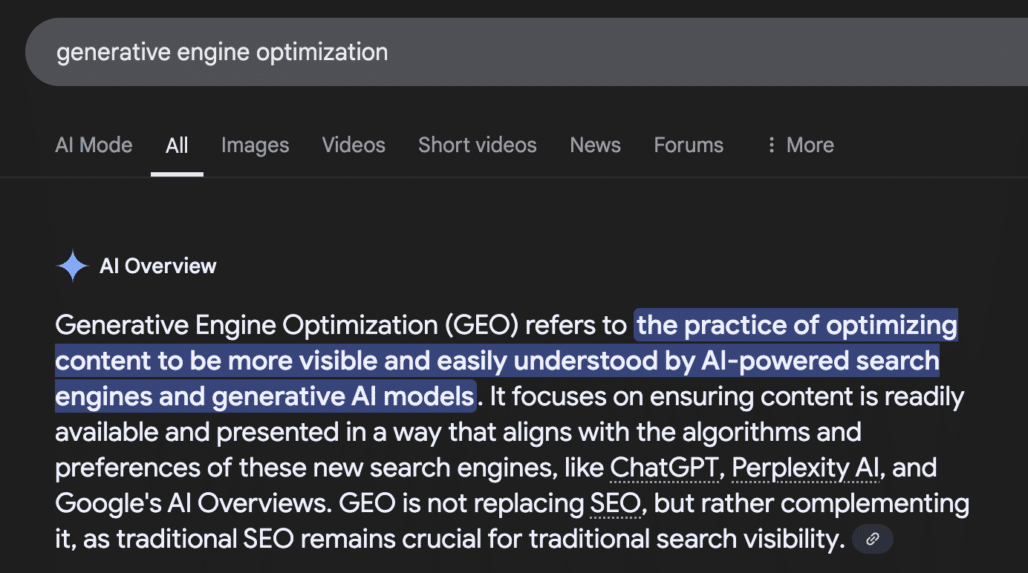
How to GEO
Optimizing your website content for GEO isn’t a tricky new science; it basically just requires you to have good, digestible content that the AI models can find and parse down for quick delivery. GEO should work in tandem with good SEO practices for the best experience. There are a few tips to achieve this:
1: Write Conversational, Answer-Based Content
Think about what your target audience might be searching for or asking Google to find for them. Structuring your content around answering questions is the key to getting your results picked up by AI. Use concise, easy-to-follow language that mirrors the flow of a natural conversation.
2: Use Organized Page Structure
Clear, well-organized content doesn’t just help your readers—it makes it way easier for AI tools to understand and reference your content. Generative engines like structure they can follow, so the better your page formatting, the more likely your content is to be picked up and referenced.
3: Focus on Topical Authority
You’re the expert in your field and your website topics should reflect that. Pick a core topic or niche your brand or site is known for (e.g., sustainable farming, healthcare, or digital marketing) and provide valuable content based around your niche. The more value you bring your topic, the better your Google rankings will be.
4: Cite Credible Sources
AI is getting smarter at weeding out inaccurate information and instead focusing on trusted data and legitimate, established facts. When sharing information on your website, be sure to reference credible sources—it helps build trust and boosts your authority.
5: Keep it Fresh
This one doesn’t just apply to new GEO strategies; it’s been a cornerstone SEO tip for years. Stagnant websites that never get updated are not going to rank very well. Ensure you’re updating your website regularly, whether it be through blog posts, featuring new projects or products, or just updating old information.
If GEO is feeling overwhelming, rest assured that it really isn’t. The purpose of AI integration is actually to make life easier on internet users. By providing honest, well-structured and relevant content you’re proving to AI models that your website is worth displaying in results. It’s worth repeating that SEO still matters and a lot of the current practices are still crucial, especially since they work in tandem with generative searches to provide the user with the best information from the best sources.

Where do I start?
We speak robot! We offer GEO and SEO services to optimize your website. If you’re interested in optimizing your site for GEO, get in touch with us to get started.